
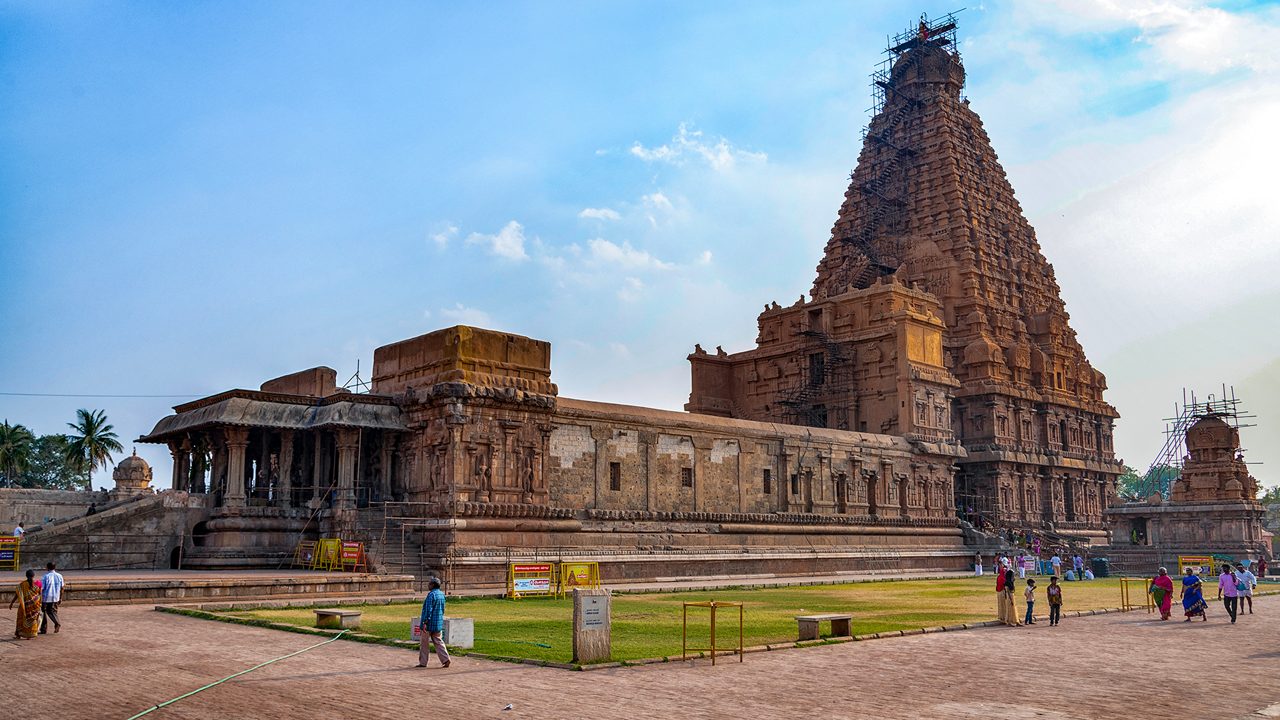
Mylapore Kapaleeshwarar Temple
Introduction
Among the revered temples of Tamil Nadu, the Arulmigu Kapaleeshwarar Temple in Mylapore, Chennai, stands out as a prominent spiritual landmark. Dedicated to Lord Shiva, this ancient shrine attracts countless devotees, pilgrims, and tourists every year.
About the Temple
Situated in the heart of Mylapore, the Kapaleeshwarar Temple is one of India’s most celebrated Shiva temples. Lord Shiva is worshipped here as Kapaleeswarar, believed to be a self-manifested (Swayambhu) form, while Goddess Parvati appears as Karpagambal, the granter of boons.
A popular legend associated with the temple explains how the name Mylapore originated. According to tradition, Goddess Uma wished to learn the true essence of the sacred five-syllable mantra “Na Ma Shi Va Ya.” While Lord Shiva was explaining its significance and the meaning of sacred ash, the Goddess became distracted by a graceful peahen dancing nearby. Upset by her lapse in concentration, Shiva cursed her to take birth as a peahen.
To regain her divine form, the Goddess performed penance on Earth, worshipping the Shivalinga under a Punnai tree at the very spot where the temple stands today. Pleased by her devotion, Shiva restored her to her original form. Hence, the place came to be called Mylapore—Mayil meaning peahen in Tamil.
Other Legends Connected With the Temple
Several traditional stories highlight the sanctity of Kapaleeshwarar Temple:
Lord Muruga’s Visit
Before going to battle with the demon Surapadman, Lord Muruga is believed to have visited this temple to seek blessings from both his parents—Lord Shiva and Goddess Karpagambal. It is here that he received the divine Shaktivel, the spear symbolizing strength and victory.
Why Shiva Is Known as Kapaleeshwarar
Another legend narrates that Lord Brahma, the creator, once considered himself equal to Shiva because he too had five heads. To humble Brahma and correct his arrogance, Shiva removed one of Brahma’s heads and carried the skull in his hand. Hence, the name Kapaleeshwarar—derived from the Sanskrit word Kapalam meaning skull.
Architecture and Temple Layout
The temple is an excellent example of Dravidian architecture, though the current structure is not the original one. Historical sources suggest that the earlier temple might have been destroyed during Portuguese invasions. Today’s structure is estimated to be over 300 years old.
Key architectural features include:
Two grand Gopurams (gateway towers) on the east and west
The eastern tower, standing at 40 meters, is taller and richly decorated
A large temple tank near the western entrance
A Swayambhu Lingam as the main deity
Shrines dedicated to Natana Vinayakar, Palani Andavar, Vaayilar Nayanar, Singara Velar, Dakshinamurthy, Somaskandar, Durgai, and others
A small shrine under the ancient Punnai tree, depicting Goddess Karpagambal in her peahen form worshipping Shiva
Major Festivals
The most important celebration in Kapaleeshwarar Temple is the Panguni Brahmotsavam, held between mid-March and mid-April. The festival lasts for nine days and begins with flag hoisting.
The highlight is the Arubathimoovar Festival on the seventh day.
This event honors the 63 Nayanmars, the saintly devotees of Shiva, whose decorated idols are taken in a grand procession following Kapaleeswarar and Karpagambal.
The festival concludes with the holy wedding ceremony—Tirukalyanam—of Lord Kapaleeswarar and Goddess Karpagambal.
Other special days include:
Maha Shivaratri
New Moon and Full Moon days
Pradosham, which draws large crowds regularly
Temple Timings
The temple is open every day except Mondays.
Morning: 5:00 AM – 12:00 PM
Evening: 5:00 PM – 9:00 PM
Daily Pooja Schedule
Pooja
Time
Pooja
Time
Pooja
Time
Ko Pooja
5:00 AM
Vaikarai Pooja
6:00 AM
Kala Sandhi Pooja
8:00 AM
Uchi Kala Pooja
12:00 PM
Ardhajama Pooja
9:00 PM
—
—
How to Reach Kapaleeshwarar Temple
By Air
The nearest airport is Chennai International Airport, located about 16 km from Mylapore. Taxis and government buses are readily available from the airport.
By Rail
Chennai Central Railway Station is around 8 km from the temple.
Trains from major cities across India arrive here.
From the station, visitors can take buses or taxis directly to Mylapore.
By Road
Kapaleeshwarar Temple is around 8 km from Chennai city center.
Chennai is well connected by national and state highways, making it easy to reach by car or bus. Numerous government and private buses travel from different parts of South India to Chennai, from where Mylapore is easily accessible.